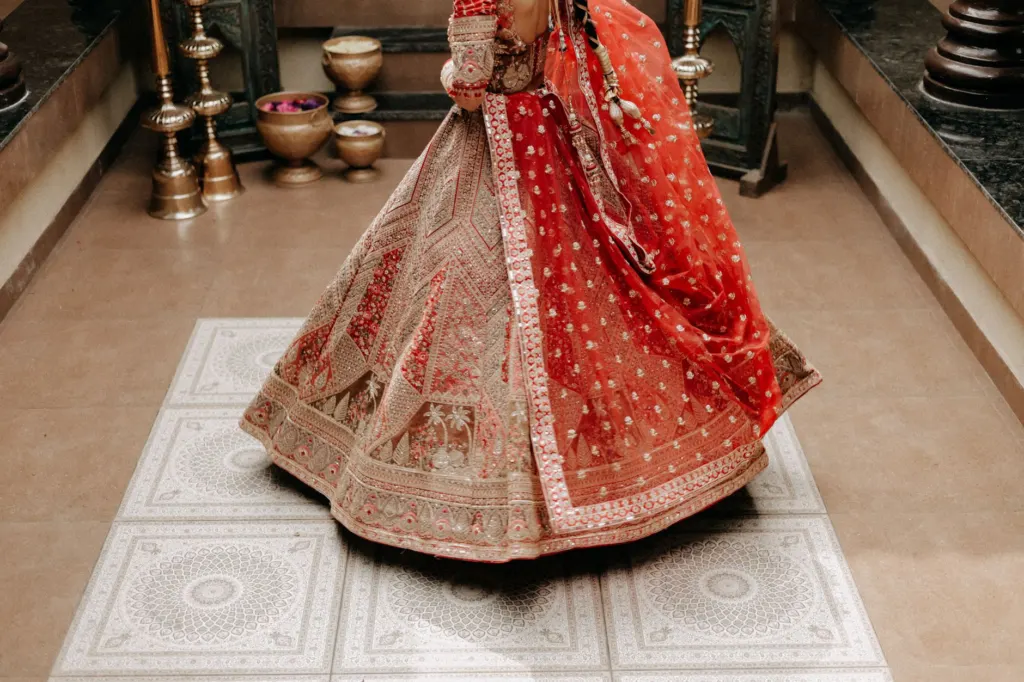
An Indian bridal lehenga is a three-piece wedding outfit: a full, ankle-length skirt, a fitted blouse (choli) and a dupatta, usually covered in embroidery. To choose one, settle the shape first, then the fabric, embroidery and colour. Before you pay, check the weight, the fit and the shop’s lead time. The skirt comes from the Indian subcontinent, and Wikipedia notes it is used extensively in weddings across the region.
Start with the shape of your Indian bridal lehenga
The shape decides how the outfit looks and how you move in it, so compare the main ones first.
| Shape | What it looks like | Moving in it | Suits |
|---|---|---|---|
| A-line | Fitted at the waist, widening gently to the hem | Easy to walk and sit in | A long ceremony |
| Flared or circular | A very full, round skirt, often cut in many panels called kalis | Free, but the volume adds weight | The traditional full-skirted look |
| Fishtail or mermaid | Fitted from waist to knee, then flaring out | Harder to sit and dance in | Events where you mostly stand |
| Straight | A narrow column with no pleats or layers | Light, and a side slit makes walking easier | A reception |
| Trail | Extra fabric at the back that forms a train | Someone has to carry or arrange the train | Brides who want a train |
Fuller skirts get their volume from extra layers, known as a can-can. Ask how many layers there are, because more layers mean more drama and more weight.
Fabric
- Silk and raw silk – rich, structured and traditional. Raw silk is a common base for heavy embroidery.
- Velvet – warm and regal. A good choice for a winter wedding in the UK, and far too hot for July.
- Georgette, net and organza – light and floaty. Comfortable for summer and for dancing.
Embroidery and work
The handwork is what makes a bridal lehenga, so it is also what drives the price.
- Zardozi – dense work in gold or silver-wrapped thread. The V&A calls it an extravagant form of embroidery. Heavy, formal and traditional.
- Gota patti – gold or silver ribbon appliqué from Rajasthan. It looks rich but is light to wear.
- Resham – embroidery in silk thread, often floral.
- Mirror work – small mirrors stitched into the fabric, catching the light as you move.
- Sequins, beads and crystals – added for shine, and common on reception and sangeet pieces.
Colour
Red and maroon remain the traditional choice, usually worked with gold. However, many brides now choose ivory, blush pink, pastels or jewel tones such as emerald. No rule fits every family, so ask parents and in-laws early whether they have expectations. For how traditions differ by region, see our overview of Indian wedding clothes.
Weight and comfort
A heavily worked bridal lehenga is heavy, and you will wear it through a long ceremony. So when you try one on:
- Walk, sit down and climb a step. A Hindu ceremony includes walking around a fire, and in a gurdwara you sit on the floor.
- Wear the shoes you plan to wear, so the hem is set at the right length.
- Check the waistband. A firm, well-fitted waist carries the weight; a loose one drags.
- Practise with the dupatta. Brides often add a second one for the head, so try both together.
The blouse and dupatta
The blouse is the one piece that must fit you exactly, so expect at least one fitting. Decide on sleeve length and neckline with your venue in mind. A temple or gurdwara ceremony calls for more coverage than an evening reception. For a gurdwara, our guide to what to wear to a Sikh wedding explains the head covering rules. Whoever drapes your dupatta on the day should also practise beforehand.
What to check before you pay
Prices vary widely with the fabric and handwork. As a guide, on 22 November 2026 the first page of ready-to-wear lehengas on Manyavar’s UK site showed prices from £385 to £1,475. Designer bridal sets on the first page at Aza Fashions, an Indian retailer that ships worldwide, ran from ₹35,087 to ₹885,000. Before you pay a deposit, ask about:
- What is included. Check whether the blouse is stitched, and whether the dupatta, a second dupatta and the can-can are in the price.
- Alterations. Ask what they cost and who does them.
- The delivery date. Get it in writing, with time left for alterations.
- Returns. A made-to-order outfit is hard to send back. Citizens Advice explains that the 14-day cooling-off period for online orders does not cover bespoke or made-to-measure items.
- Import charges. If the lehenga is sent from India, ask whether the price includes them. Under GOV.UK’s rules on tax and duty for goods sent from abroad, VAT is charged, and Customs Duty can apply to goods worth more than £135.
How much time to allow
A made-to-order Indian bridal lehenga takes time to embroider, ship and alter. Aza Fashions advises starting four to six months before the wedding, because making takes several weeks and alterations come afterwards. Lead times also differ from piece to piece, so ask each shop for its own before you set your heart on one. If time is short, ready-to-wear pieces need only fitting.
For where to look, see our guide to buying Indian wedding clothes in the UK. And if you are still deciding whether a lehenga is right for you at all, read saree vs lehenga.